 MyKrugerHoliday
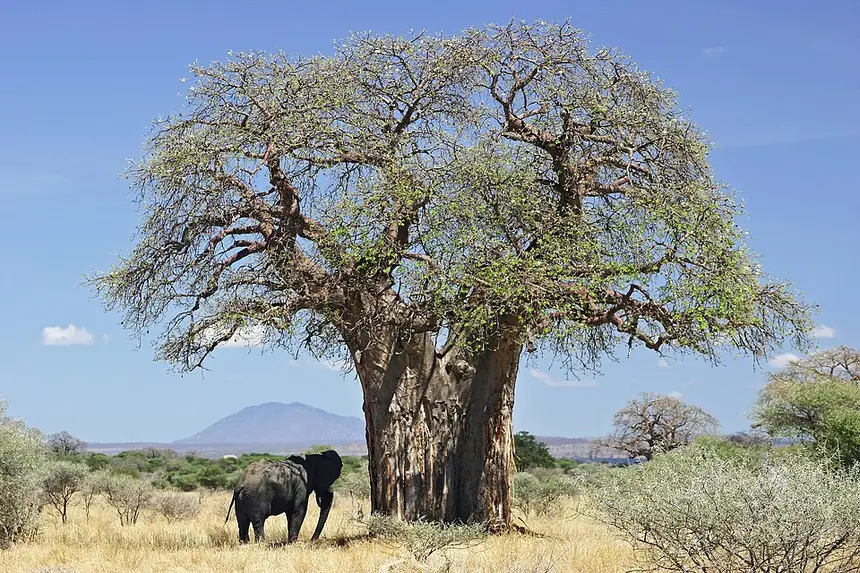
Photo: Ferdinand Reus from Arnhem, Holland · CC BY-SA 2.0 · source ↗
Baobab
Kremetartboom · Adansonia digitata
The baobab is the giant of the far north and one of the longest-lived trees on the continent. A single old tree stores tonnes of water in its fibrous trunk, which is why elephants gouge and chew the bark in dry spells.
Log your Baobab sighting — free →How to identify it
Unmistakable: a massively swollen, smooth grey trunk that looks like elephant hide, tapering into a squat crown of stubby branches that resemble roots stuck in the air. Leafless for much of the year, showing the bare 'upside-down tree' silhouette.
Flowers & fruit
Large white flowers open at dusk in the wet season (roughly October–December); the woody, velvety pods hang on and ripen through the following dry months.
Browsed by
Elephants strip and chew the fibrous bark for moisture; baboons and monkeys eat the fruit and are major seed dispersers along with elephants; the night-opening flowers are visited by fruit bats and bushbabies.
Where to see it in Kruger
Far north only, from around Punda Maria and Pafuri north to the Luvuvhu and Limpopo valleys; scattered on sandveld and the northern basalt plains. You will not see them in the central or southern park.
Did you know
The big white flowers open at dusk and are pollinated at night by fruit bats and bushbabies (galagos), not by day-flying insects.
See it? Log it — free.
MyKrugerHoliday is a free, offline field guide and one-tap sighting log for a Kruger self-drive. No ads, no account, works with no signal.