 MyKrugerHoliday
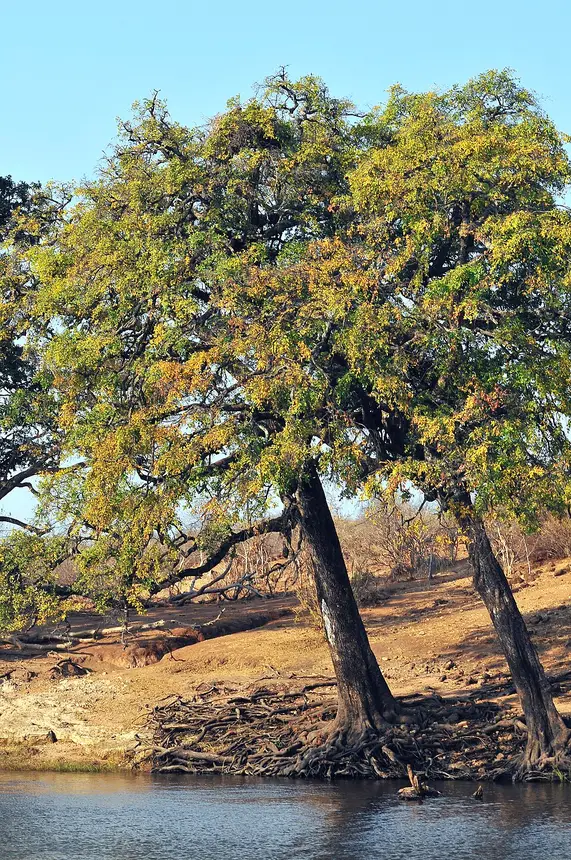
Photo: LBM1948 · CC BY-SA 4.0 · source ↗
Jackalberry
Jakkalsbessie · Diospyros mespiliformis
Also called African ebony, the jackalberry is the classic shade giant of the riverbanks and termite mounds. It is a wildlife hub, feeding and sheltering everything from hornbills to elephants.
Log your Jackalberry sighting — free →How to identify it
A big, densely leafy evergreen giving deep shade, usually along rivers or growing straight out of a termite mound. Dark, roughly rectangular-cracked bark and glossy leaves; small round yellow fruit in the dry season.
Flowers & fruit
Cream flowers in spring/early summer (roughly October–December); the yellow fruit ripens through the dry winter.
Browsed by
Fruit eaten by elephants, baboons, warthogs, nyala, kudu, impala and bushbuck, plus hornbills and other birds; browsers feed and rest in its shade, and elephants take the leaves when food is scarce.
Where to see it in Kruger
Along rivers and on alluvial floodplains throughout the park, and very often perched on old termite mounds where its roots reach deep moisture.
Did you know
The name comes from jackals, which eat the fallen fruit and disperse the seeds in their droppings.
See it? Log it — free.
MyKrugerHoliday is a free, offline field guide and one-tap sighting log for a Kruger self-drive. No ads, no account, works with no signal.