 MyKrugerHoliday
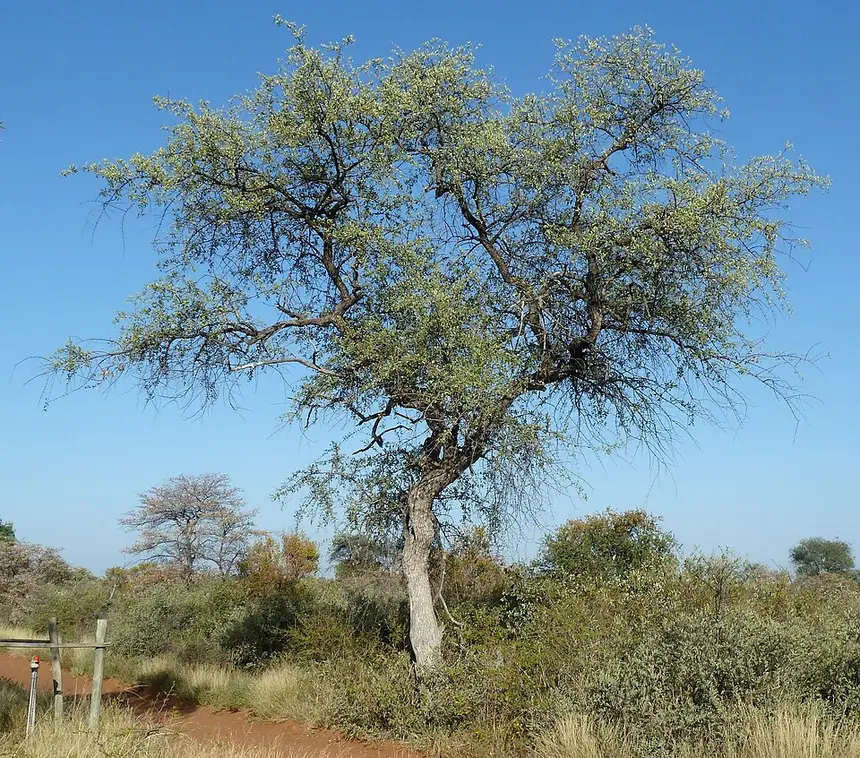
Photo: JMK · CC BY-SA 3.0 · source ↗
Leadwood
Hardekool · Combretum imberbe
Leadwood is the slow-growing heavyweight of the drainage lines, with wood so dense it sinks in water. Individual trees can be over a thousand years old, making them living landmarks.
Log your Leadwood sighting — free →How to identify it
A tall, stately tree with a pale grey to almost white trunk and distinctive blocky, snakeskin-like cracked bark. Spreading canopy; small four-winged papery seeds are typical of the bushwillows. Dead leadwoods stay standing for decades as bleached silver skeletons.
Flowers & fruit
Small creamy-yellow flower spikes in summer (roughly November–February), followed by pale four-winged fruit.
Browsed by
Leaves browsed by kudu, impala, giraffe and elephant; elephant and giraffe also break and eat the branches.
Where to see it in Kruger
Scattered across the park but favouring deeper alluvial and clay soils near drainage lines, rivers and on basalt flats; often a prominent tall tree standing above the surrounding bush.
Did you know
Radiocarbon dating has aged leadwoods at over 1,000 years, and roughly 30 cm of trunk width represents about 500 years of growth.
See it? Log it — free.
MyKrugerHoliday is a free, offline field guide and one-tap sighting log for a Kruger self-drive. No ads, no account, works with no signal.