 MyKrugerHoliday
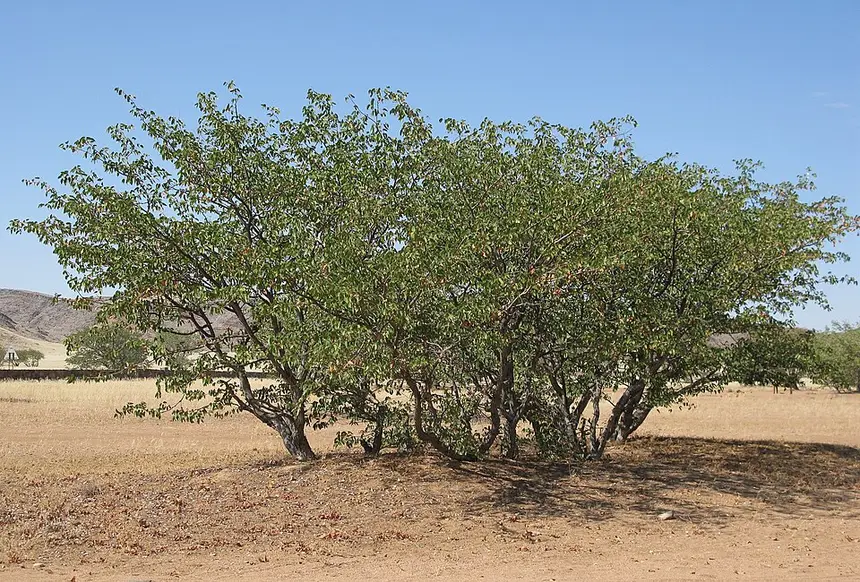
Photo: Roger Culos · CC BY-SA 3.0 · source ↗
Mopane
Mopanie · Colophospermum mopane
Mopane defines the northern half of the park, carpeting huge areas in butterfly-leaved woodland. It is a keystone tree, feeding elephants and hosting the famous mopane worm.
Log your Mopane sighting — free →How to identify it
Each leaf is two joined leaflets shaped like a butterfly's wings that fold together in the heat. Ranges from low 'mopane scrub' to tall cathedral mopane; leaves turn gold and red in autumn. Often forms endless near-single-species woodland.
Flowers & fruit
Inconspicuous greenish flowers in summer (roughly December–January), followed by flat, kidney-shaped pods.
Browsed by
A staple food of elephants, which pollard whole woodlands down to shrub height; kudu and eland browse the leaves; the leaves also feed the mopane worm caterpillar.
Where to see it in Kruger
Dominant across the north, roughly north of the Olifants/Letaba rivers, on both basalt and other soils; tall 'cathedral' mopane on richer sites and stunted scrub mopane on poorer ground.
Did you know
The protein-rich leaves feed the mopane worm (the caterpillar of an emperor moth), a traditional food harvested and eaten across the region.
See it? Log it — free.
MyKrugerHoliday is a free, offline field guide and one-tap sighting log for a Kruger self-drive. No ads, no account, works with no signal.